The Paris Agreement, adopted in 2015, represents a landmark commitment by nations worldwide to combat climate change. Among its various provisions, Article 6 stands out as a pivotal mechanism for enhancing global cooperation in achieving climate goals. For India, a developing nation with significant renewable energy potential and a growing economy, Article 6 offers a unique opportunity to expand its carbon credit exports. This article delves into the implications of Article 6 for India, particularly in the context of its burgeoning carbon credit market.
Article 6 of the Paris Agreement outlines a framework for international cooperation to meet emission reduction targets. It allows countries to engage in cooperative approaches, including the trading of carbon credits. This is crucial for nations like India, which has committed to reducing its carbon emissions intensity by 33-35% by 2030 from 2005 levels. Under Article 6, India can leverage its vast renewable resources, including biomass energy, to generate carbon credits and sell them to other countries striving to meet their emissions targets.
The concept of carbon credits is relatively straightforward: it involves a system where a country or organization can earn credits for reducing greenhouse gas emissions. These credits can then be sold to other nations that are struggling to meet their own emission reduction commitments. For India, this presents an opportunity not only to generate revenue but also to enhance its global standing in climate negotiations.
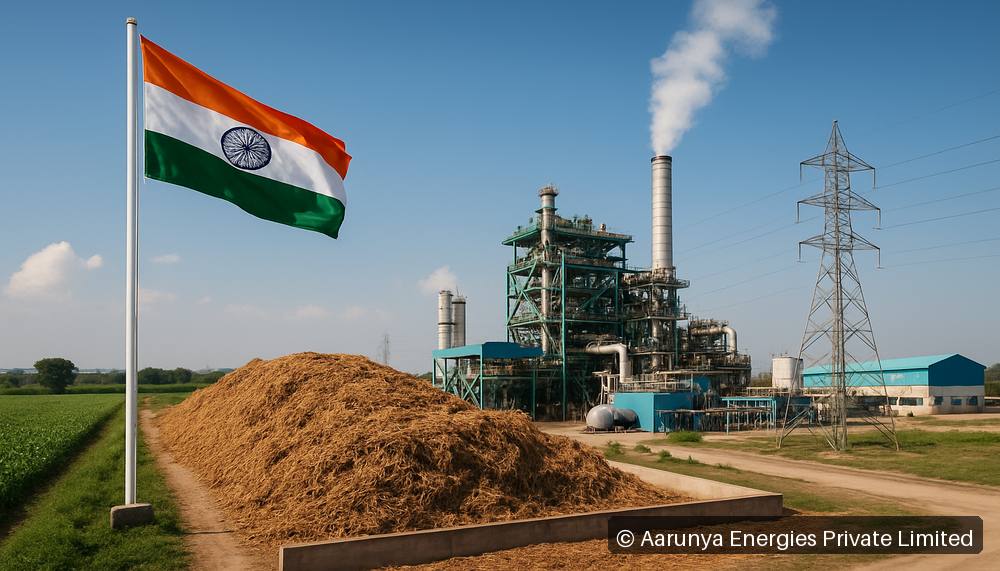
India is one of the largest producers of biomass energy, including solid biofuels like briquettes and pellets. The country’s agricultural sector produces a significant amount of biomass waste, which can be converted into energy. By investing in and promoting biomass energy projects, India can create additional carbon credits that can be sold internationally. This aligns with the global trend towards renewable energy and sustainable practices, positioning India as a key player in the carbon credit market.
Furthermore, Article 6 encourages innovation and investment in green technologies. For India to maximize its potential in carbon credit exports, it needs to enhance its infrastructure for renewable energy production and carbon credit verification. This includes implementing robust monitoring, reporting, and verification (MRV) systems that align with international standards. By doing so, India can ensure that its carbon credits are credible and can be traded on the international market, thus attracting foreign investment.
The impact of Article 6 on India's economy could be profound. The revenue generated from carbon credit exports can be reinvested into further renewable energy projects, creating a virtuous cycle of sustainability and economic growth. Additionally, as global awareness of climate change increases, the demand for carbon credits is expected to rise, providing India with a lucrative market opportunity.
However, there are challenges that India must navigate to fully capitalize on Article 6. These include regulatory barriers, the need for technological advancements, and ensuring equitable access to carbon credit markets for smaller producers. To address these challenges, the Indian government must establish clear policies and frameworks to support the growth of the carbon credit sector.
In conclusion, Article 6 of the Paris Agreement offers India a unique opportunity to enhance its carbon credit exports while contributing to global climate goals. By leveraging its renewable energy potential, particularly in biomass energy, India can emerge as a leader in the carbon credit market. The successful implementation of this mechanism will not only aid in achieving India's climate commitments but also foster economic growth and sustainability in the long run. As the world continues to grapple with the impacts of climate change, India’s proactive approach to carbon credits could serve as a model for other nations seeking to balance development with environmental responsibility.