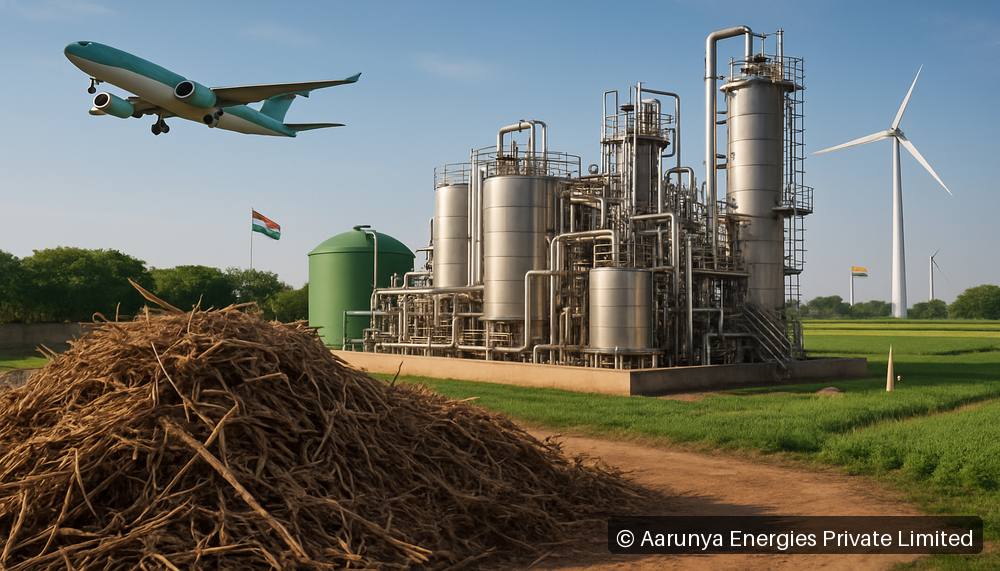
As the world grapples with climate change, the aviation sector faces increasing pressure to reduce its carbon footprint. In India, where air travel is booming, the need for sustainable solutions is more critical than ever. Sustainable Aviation Fuel (SAF) emerges as a promising alternative that can propel India's aviation sector toward carbon neutrality.
SAF is a renewable fuel produced from sustainable resources, such as biomass, waste oils, and other organic materials. Unlike conventional jet fuels derived from fossil fuels, SAF has a significantly lower lifecycle carbon footprint. The adoption of SAF in India can help mitigate greenhouse gas emissions, contributing to the nation's goal of achieving carbon neutrality by 2070.
The Indian aviation industry has been growing at an unprecedented rate, with passenger traffic expected to double in the next few years. This rapid growth, while economically beneficial, poses a significant challenge regarding environmental sustainability. The aviation sector is responsible for about 2-3% of global carbon emissions, and India, being one of the fastest-growing aviation markets, must address this issue proactively.
One of the primary barriers to the widespread adoption of SAF in India is its availability and production capacity. Currently, the majority of SAF is produced in developed countries, with limited infrastructure and investment in India. However, the Indian government has recognized the potential of SAF and is taking steps to create a conducive environment for its production and use. Initiatives such as the National Biofuel Policy and various incentives for biofuel production can play a crucial role in this transition.
The use of SAF can significantly reduce the aviation sector's reliance on fossil fuels. According to studies, SAF can reduce greenhouse gas emissions by up to 80% compared to traditional aviation fuels over the lifecycle. By integrating SAF into the fuel mix, Indian airlines can not only reduce their carbon footprint but also enhance their sustainability credentials, appealing to environmentally conscious consumers.
Furthermore, investing in SAF aligns with India's broader renewable energy goals. As the country aims to achieve 500 GW of renewable energy capacity by 2030, integrating biofuels into the energy mix can create synergies that benefit multiple sectors. The cultivation of feedstocks for SAF production can also provide additional revenue streams for farmers, supporting rural economies and promoting sustainable agricultural practices.
In addition to environmental benefits, SAF can bolster India's energy security. By reducing dependence on imported fossil fuels, India can enhance its energy independence and create a more resilient energy infrastructure. The domestic production of SAF from locally sourced materials can also stimulate job creation and innovation in the biofuel sector.
Several Indian airlines have already begun to explore the use of SAF. Initiatives and partnerships aimed at testing and implementing SAF in flight operations are crucial steps toward establishing a sustainable aviation ecosystem. These pilot projects will help build the necessary infrastructure and supply chains, paving the way for broader adoption across the industry.
The role of private and public investment cannot be understated in this context. Increased funding for research and development of SAF technologies, as well as financial support for biofuel production facilities, will be pivotal in scaling up production. Collaborations between the government, private sector, and research institutions can accelerate the development of innovative solutions that enhance SAF production efficiency and sustainability.
In conclusion, Sustainable Aviation Fuel represents a key opportunity for India's aviation sector to move towards carbon neutrality. By investing in SAF, India can significantly reduce its carbon emissions, enhance energy security, and promote sustainable economic growth. The transition to SAF is not merely an environmental imperative; it is a strategic opportunity for India to lead in the global shift towards sustainable aviation. As stakeholders across the industry come together to embrace this change, the vision of a carbon-neutral aviation sector in India becomes increasingly attainable.