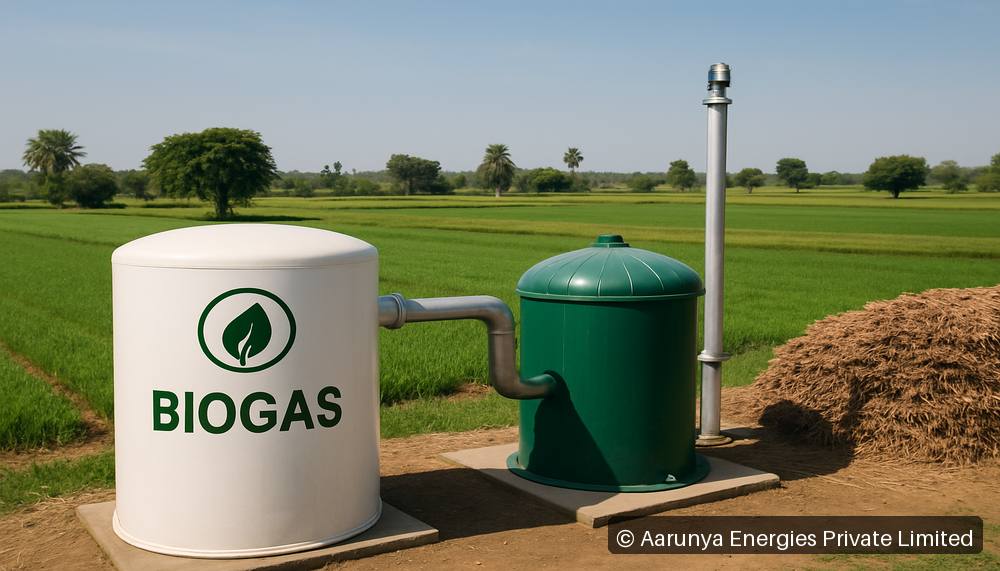
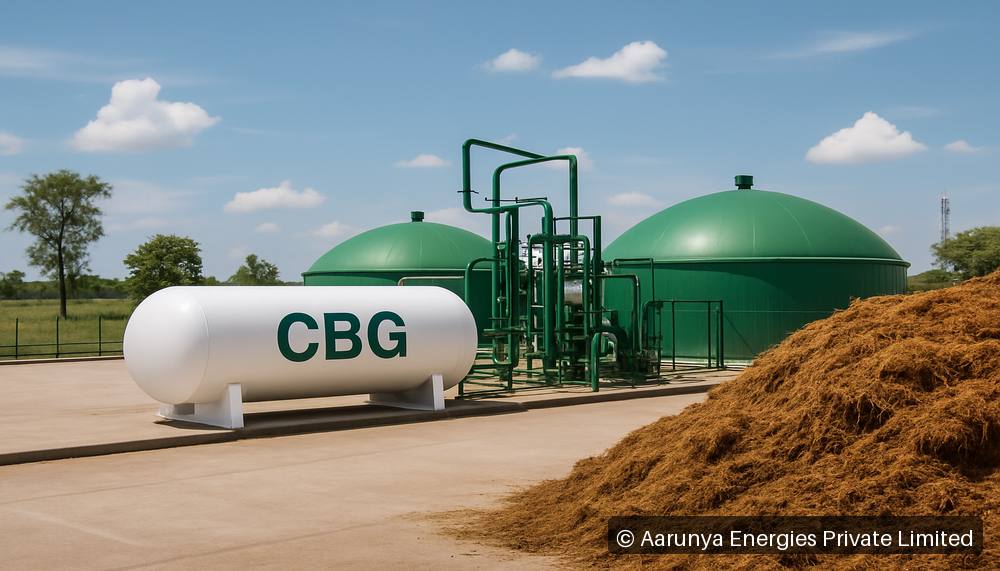
Compressed Biogas (CBG) has emerged as a vital component in India's renewable energy landscape, particularly in the context of sustainable agricultural practices and waste management. With an abundance of agricultural residues and organic waste, India is uniquely positioned to harness the potential of CBG production from farm waste. This article delves into the workings of CBG plants in India, the processes involved in converting farm waste into compressed biogas, and the broader implications for the environment and energy security.
CBG is a clean, renewable fuel produced from the anaerobic digestion of organic matter, such as agricultural residues, livestock manure, and other biodegradable materials. In India, where agriculture plays a crucial role in the economy and employs a significant portion of the population, leveraging farm waste for CBG production presents a dual benefit: it provides an efficient waste management solution and creates a sustainable energy source.
The production of CBG typically involves several key stages. Initially, organic waste is collected and sorted at the CBG plant. This waste primarily consists of leftovers from crop production, such as straw, husks, and other residues that would otherwise be burned or left to decay, contributing to greenhouse gas emissions. By utilizing this waste, CBG plants not only mitigate environmental pollution but also promote a circular economy.
Once collected, the organic waste undergoes anaerobic digestion, a biological process facilitated by microorganisms that break down the material in the absence of oxygen. This digestion process occurs in large, sealed tanks known as digesters. The conditions within these digesters—temperature, pH, and retention time—are carefully controlled to optimize biogas production. The result of this digestion is a mixture of gases, primarily methane and carbon dioxide, which is then purified to remove impurities and enhance the methane content. The purified gas is what is known as Compressed Biogas.
After purification, CBG can be compressed and stored in cylinders for transportation and use. It can serve as a direct replacement for natural gas in various applications, including cooking, heating, and even as a fuel for vehicles. The versatility of CBG makes it a valuable resource, especially in rural areas where access to clean energy sources is limited.
In India, the government has been proactive in promoting CBG production through various initiatives and schemes. The National Biogas and Manure Management Programme, for example, aims to support the establishment of biogas plants across the country. Additionally, the Pradhan Mantri Ujjwala Yojana encourages the use of clean cooking fuel, which aligns with the development of CBG as a sustainable alternative to traditional biomass fuels.
Moreover, the establishment of CBG plants contributes to job creation and economic development in rural areas. By fostering local entrepreneurship and providing training for farmers on waste management and biogas production, these plants empower communities and enhance their livelihoods. This socio-economic impact is particularly significant in a country where agriculture is the backbone of rural life.
The environmental benefits of CBG production cannot be overstated. By converting farm waste into biogas, CBG plants help reduce methane emissions that occur from the decomposition of organic waste in open fields. Additionally, the use of CBG as a clean energy source decreases reliance on fossil fuels, contributing to lower carbon emissions and a more sustainable energy future.
In conclusion, CBG plants in India represent a promising avenue for transforming farm waste into a valuable energy resource. By leveraging agricultural residues for CBG production, India can address pressing issues such as waste management, energy security, and environmental sustainability. As the global demand for clean energy continues to rise, India's commitment to CBG production will play a pivotal role in shaping a greener, more sustainable future.