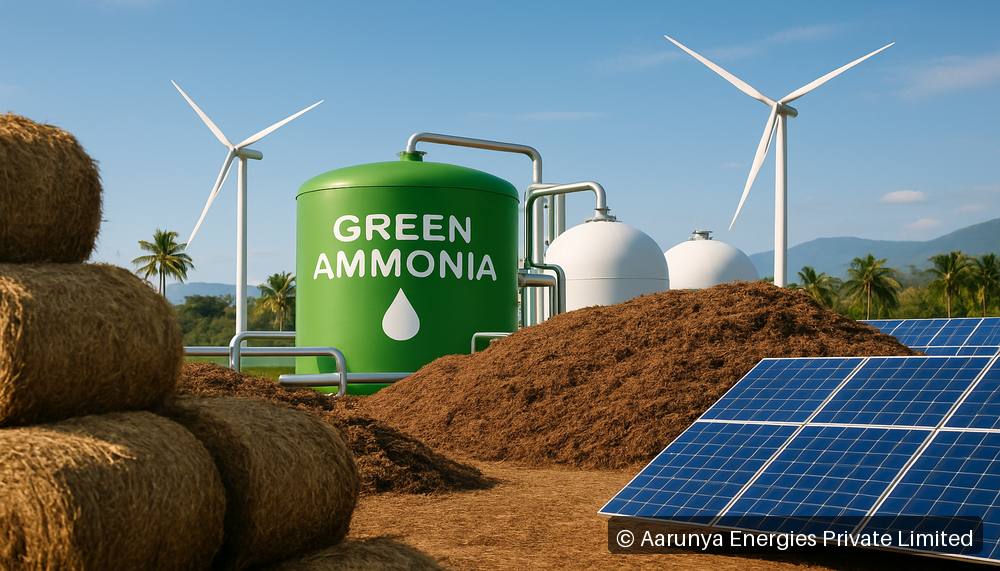
As India strives to achieve energy security and sustainable agricultural practices, the focus on innovative solutions to meet the country’s fertilizer demand is more crucial than ever. One such solution that has gained significant attention is green ammonia. This eco-friendly alternative not only meets the growing agricultural needs but also plays a vital role in reducing carbon emissions associated with traditional fertilizer production.
Green ammonia is produced using renewable energy sources, such as wind and solar power, to electrolyze water and produce hydrogen. This hydrogen is then combined with nitrogen extracted from the air to create ammonia. Unlike conventional ammonia production, which is heavily reliant on fossil fuels and contributes to greenhouse gas emissions, green ammonia offers a sustainable and low-carbon solution. In a country like India, where agriculture is the backbone of the economy, the shift to green ammonia could revolutionize the fertilizer industry.
India's agricultural sector is responsible for a significant portion of the country's GDP and employs nearly half of the workforce. With a population exceeding 1.4 billion and the need to ensure food security, the demand for fertilizers continues to rise. Traditional ammonia production processes, primarily through the Haber-Bosch method, emit substantial amounts of CO2, making it imperative to find cleaner alternatives. Green ammonia presents itself as an ideal candidate to bridge this gap, supplying fertilizers without the associated carbon footprint.
The use of green ammonia can substantially reduce emissions in the fertilizer sector. According to estimates, shifting to green ammonia could cut down CO2 emissions by up to 3.5 gigatons annually, a significant advantage considering India's commitment to the Paris Agreement and its goal of achieving net-zero emissions by 2070. Furthermore, the production of green ammonia aligns with the Indian government’s initiatives to promote renewable energy and reduce reliance on fossil fuels.
In addition to its environmental benefits, green ammonia has the potential to enhance food security. The versatility of ammonia makes it an essential component in producing nitrogen-based fertilizers like urea and ammonium sulfate. As farmers increasingly adopt sustainable practices and seek to maximize crop yields, green ammonia can be an integral part of their toolkit, ensuring that nutrient supply is both efficient and environmentally conscious.
Moreover, the production of green ammonia can stimulate economic growth in rural areas. By investing in renewable energy projects and green ammonia production facilities, India can create job opportunities in sectors such as agriculture, energy, and manufacturing. This not only supports the local economy but also contributes to the development of a robust green economy.
However, to unlock the full potential of green ammonia, several challenges must be addressed. Infrastructure development is critical, as the current supply chain for ammonia is predominantly reliant on traditional production methods. Investments in renewable energy sources, coupled with advancements in storage and transportation technologies, will be essential to ensure the successful integration of green ammonia into the fertilizer market.
Additionally, policy frameworks and incentives will play a crucial role in driving the adoption of green ammonia. The Indian government can facilitate this transition by providing subsidies for renewable energy projects, establishing research and development initiatives, and creating awareness among farmers about the benefits of green fertilizers.
In conclusion, as India faces the dual challenge of meeting fertilizer demand and reducing its carbon footprint, green ammonia emerges as a promising solution. By harnessing renewable energy and leveraging innovative technologies, India can transform its fertilizer sector, leading to sustainable agricultural practices and significant environmental benefits. The path to a greener future is paved with such innovations, and green ammonia stands at the forefront of this transformation.