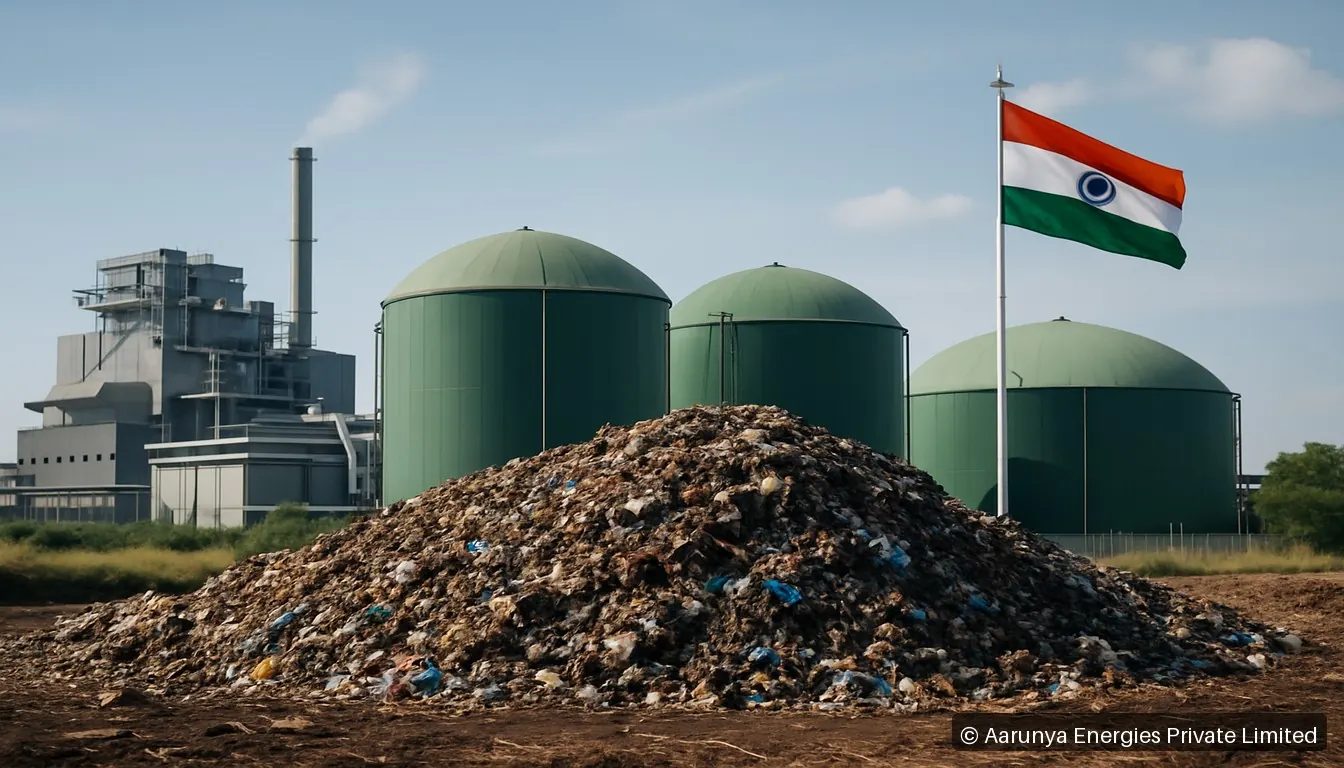
India is facing a significant challenge with municipal solid waste (MSW) management as urbanization accelerates. With over 1.3 billion people, the country generates approximately 62 million tonnes of waste annually, and this figure is expected to rise. Amidst this challenge, the conversion of municipal solid waste to energy (MSW to energy) is emerging as a viable solution, contributing to India's growing urban bioenergy sector.
The process of converting MSW into energy involves various technologies and methods, including anaerobic digestion, incineration, and gasification. Each of these methods presents unique benefits and can help mitigate the environmental impact of waste while generating renewable energy. Anaerobic digestion, for instance, breaks down organic waste in the absence of oxygen to produce biogas, which can be used for electricity generation or as a vehicle fuel. Incineration, on the other hand, reduces the volume of waste significantly and produces electricity through combustion, while gasification converts organic or fossil-based materials into carbon monoxide, hydrogen, and carbon dioxide, which can be further processed into synthetic fuels.
India's bioenergy sector is gaining momentum due to various government initiatives aimed at promoting renewable energy and sustainable waste management. The National Biofuel Policy and the Swachh Bharat Mission (Clean India Mission) are crucial frameworks that support the integration of waste management and energy production. The government has been providing financial incentives and subsidies to encourage private sector participation in waste-to-energy projects. As a result, several cities are now exploring and implementing MSW to energy projects as part of their waste management strategies.
Cities like Pune, Delhi, and Bengaluru are leading the way in adopting innovative waste-to-energy technologies. In Pune, the city has established a waste processing facility that converts organic waste into biogas, which is then used to generate electricity. Delhi's waste-to-energy plants have been producing electricity by incinerating waste, demonstrating a successful model for large-scale energy production. Meanwhile, Bengaluru's initiatives include using gasification technology to convert waste into energy, underscoring the diverse approaches being adopted across urban areas.
The benefits of converting municipal solid waste into energy extend beyond just waste reduction. It contributes to energy security by providing an alternative to fossil fuels, thereby reducing greenhouse gas emissions. Moreover, the energy generated can be used for electricity, heating, and even as fuel for vehicles, enabling a multifaceted approach to energy generation. By utilizing waste as a resource, cities can reduce their reliance on landfills, which are not only a source of environmental pollution but also a growing public health concern.
However, despite the progress, there are challenges that need to be addressed for the successful implementation of MSW to energy projects. Public awareness and participation are critical to the success of these initiatives. Educating citizens about waste segregation at the source and the importance of recycling can significantly enhance the quality of feedstock for these energy production processes. Additionally, the regulatory framework requires continual refinement to facilitate the establishment and operation of waste-to-energy plants effectively.
The financing of these projects is another hurdle, as initial capital costs can be high. To overcome this, public-private partnerships (PPPs) can play a pivotal role, enabling collaboration between the government and private entities to share costs and risks. Moreover, innovative financing models, including green bonds and impact investment, can attract funding for sustainable waste management projects.
As India continues to grapple with the dual challenges of waste management and energy security, the transition from municipal solid waste to energy offers a promising path forward. By harnessing the potential of urban bioenergy, India can not only meet its energy needs but also create a cleaner, healthier environment for its citizens. The commitment to integrating waste management with energy production is vital for sustainable urban development, ensuring that cities can thrive without compromising the ecological balance.
In conclusion, the growth of the urban bioenergy sector in India through the conversion of municipal solid waste into energy presents a unique opportunity to address pressing environmental issues. With continued government support, innovative technologies, and public engagement, India can lead the way in creating a sustainable future powered by renewable energy from waste.