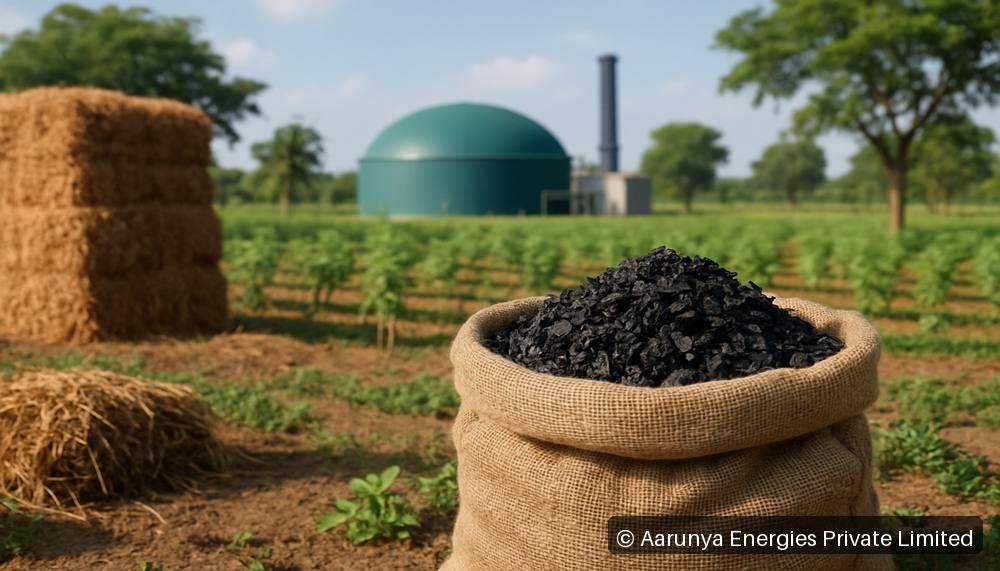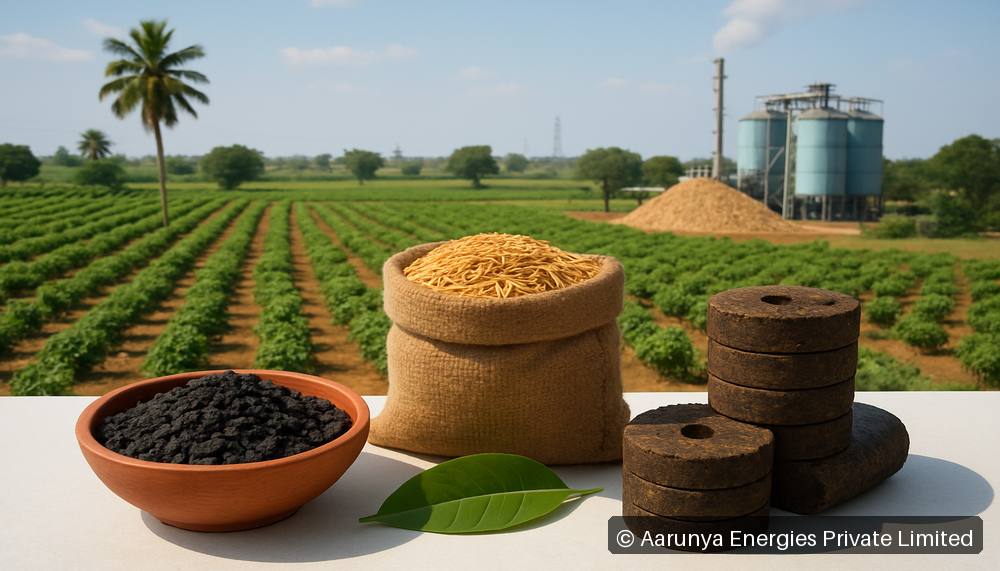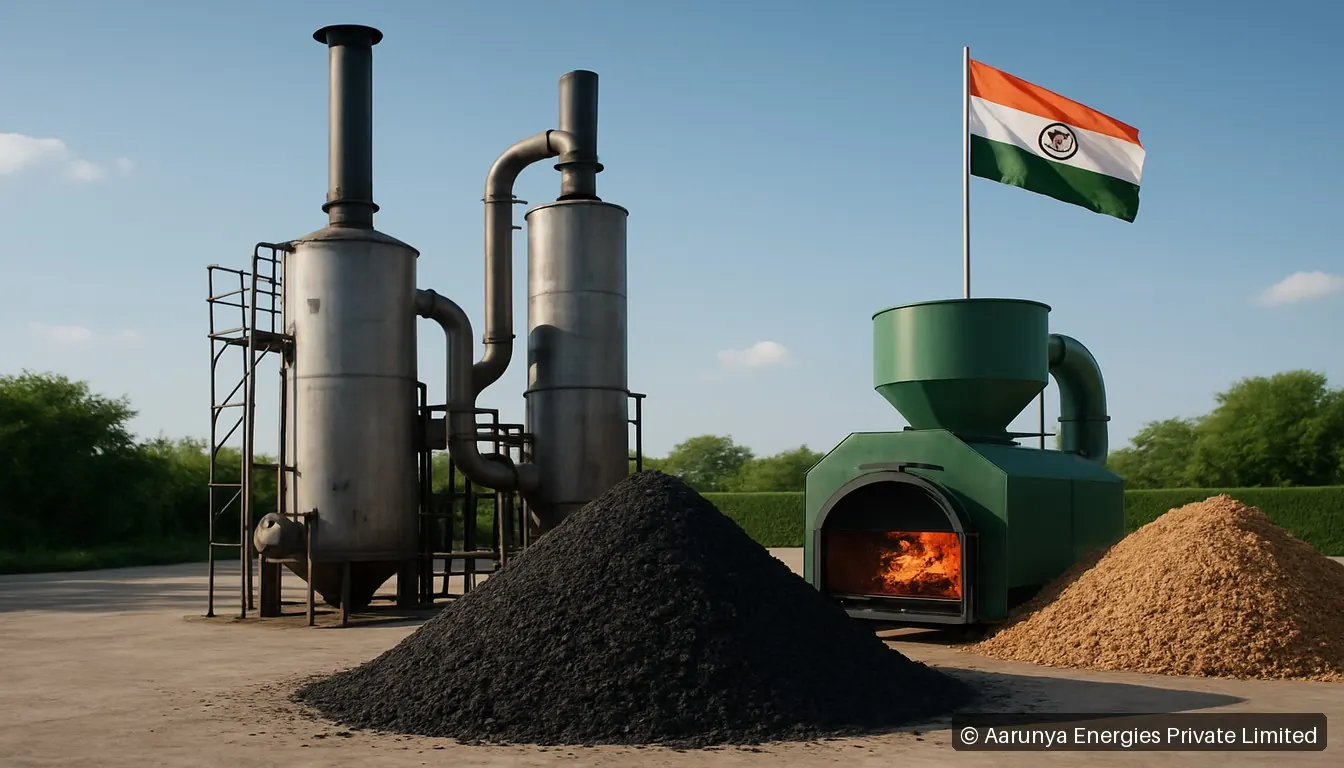
Biochar has gained attention as a sustainable solution for improving soil fertility, sequestering carbon, and enhancing agricultural productivity. In India, where agricultural challenges are significant, the production of biochar through various methods has emerged as a crucial topic. Two of the most prominent methods for biochar production are pyrolysis and gasification. This article delves into the critical differences between these two processes and evaluates their applicability in the Indian context.
Pyrolysis is a thermochemical decomposition process that occurs in the absence of oxygen. It involves heating organic materials, such as agricultural waste, at elevated temperatures (typically between 300°C and 700°C). This process converts biomass into biochar, bio-oil, and syngas. The biochar produced through pyrolysis is rich in carbon and has excellent properties for soil enhancement. In contrast, gasification is a process that converts organic or fossil-based carbonaceous materials into carbon monoxide, hydrogen, and carbon dioxide. This occurs through partial oxidation at high temperatures (above 700°C) and is typically facilitated by a limited amount of oxygen or steam.
When considering which method is better for biochar production in India, several factors come into play, including feedstock availability, energy requirements, and end uses. India boasts a vast quantity of agricultural residue, such as rice husks, wheat straw, and sugarcane bagasse. Pyrolysis can efficiently utilize these feedstocks to produce high-quality biochar, making it an attractive option for Indian farmers looking to enhance soil fertility while managing waste. The ability of pyrolysis to produce biochar as a primary product aligns well with the goals of sustainable agriculture in India, where soil health is paramount.
On the other hand, gasification offers the advantage of producing a versatile gas that can be used for energy generation or as a feedstock for other chemical processes. While it can also produce biochar as a byproduct, the primary focus tends to be on the energy output. This can be beneficial in rural areas of India, where energy access is a concern. However, the complexity of gasification systems and the need for a more controlled environment can pose challenges in terms of implementation and operational costs.
In terms of carbon sequestration, both pyrolysis and gasification can contribute to reducing greenhouse gas emissions. However, pyrolysis tends to generate a more stable form of biochar, which is better for long-term carbon storage. This characteristic is particularly important in India, where the effects of climate change are increasingly being felt in agriculture. The stable carbon in biochar not only sequesters carbon but also helps improve soil health by enhancing moisture retention and nutrient availability.
Another critical aspect to consider is the socio-economic context in India. The adoption of pyrolysis technology could provide rural employment opportunities, as small-scale pyrolysis units can be established to process local agricultural waste. This aligns with the Indian government's focus on promoting entrepreneurship and sustainable development in rural regions. In contrast, gasification may require more significant investment and technical expertise, which could limit its accessibility for small farmers.
From an environmental perspective, pyrolysis is generally seen as a more straightforward and less resource-intensive method for producing biochar. The process can be conducted using a variety of small-scale technologies, making it more adaptable to local conditions. Gasification, while offering advantages in energy production, may generate pollutants if not managed correctly, which is a concern for communities looking to maintain air quality.
Ultimately, the choice between pyrolysis and gasification for biochar production in India depends on specific goals and local conditions. For farmers aiming to improve soil health and sequester carbon, pyrolysis may be the better option due to its efficiency and the quality of biochar produced. However, for regions focused on energy generation and where agricultural waste management is a challenge, gasification could provide an alternative pathway.
In conclusion, both pyrolysis and gasification have their merits in the context of biochar production in India. Stakeholders must consider local resources, economic feasibility, and environmental implications when deciding on the most suitable method. As India continues to grapple with agricultural sustainability and climate change, biochar production through either process can play a significant role in fostering a greener future.